NEWSLETTER
Multi-layer bottles and large-diameter containers often require neck milling to create a perfectly flat, contamination-free sealing surface with the barrier layer exposed. During blow molding, the neck area may exhibit barrier leaks, deformation, or calibration marks that can lead to sealing issues and product loss.
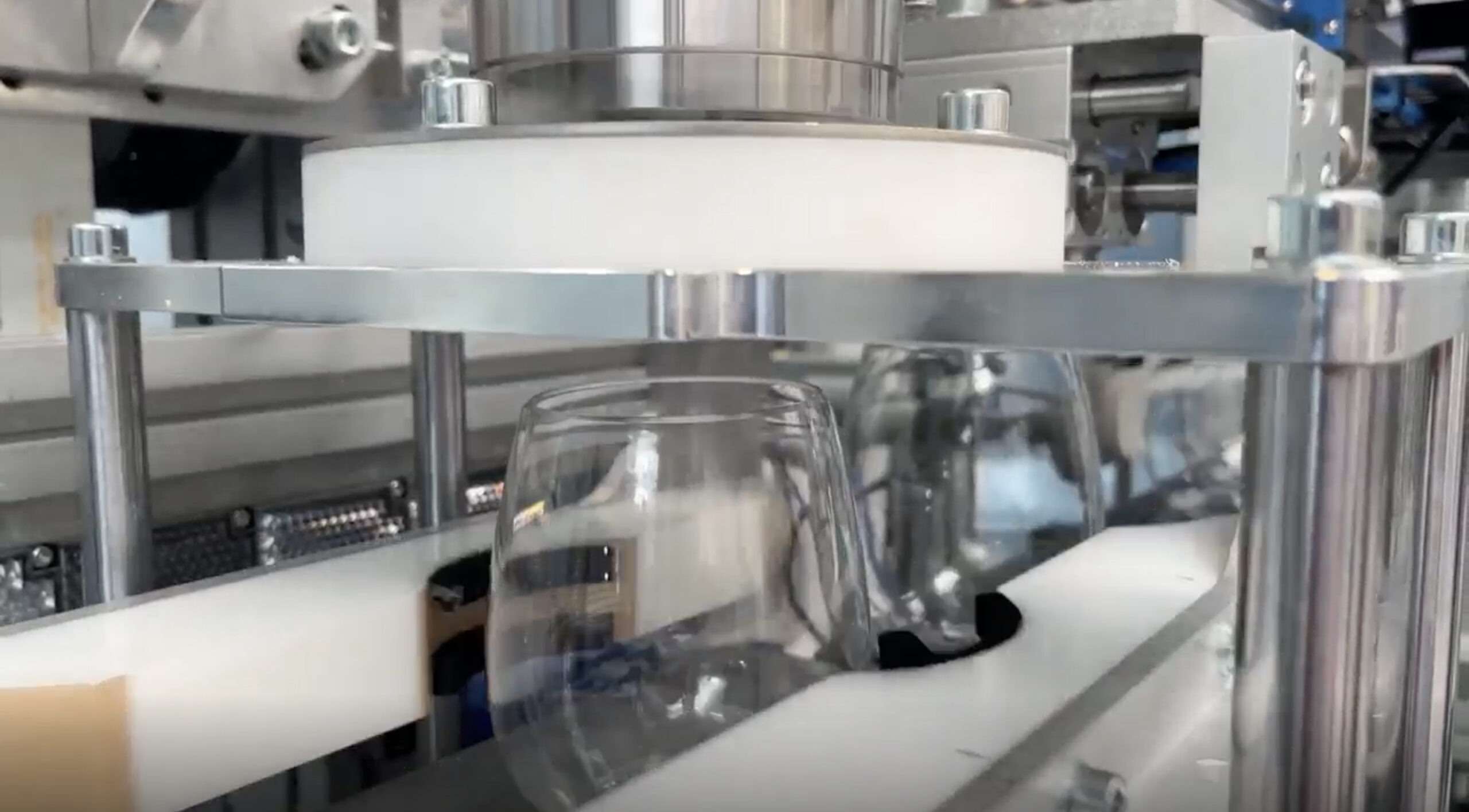
Neck milling removes the top layer of material to create a flat, uniform sealing surface. Delta Engineering’s systems ensure consistent accuracy, even on large-diameter containers, improving product integrity, reducing rejects, and supporting high-speed downstream operation. The same machine can also be used to finish the rim of PET and Tritan® glasses that are blow molded with a trimming ledge.
WHY DELTA ENGINEERING?
SPECIALIST IN TURNKEY PROJECTS FOR DOWNSTREAM SOLUTIONS
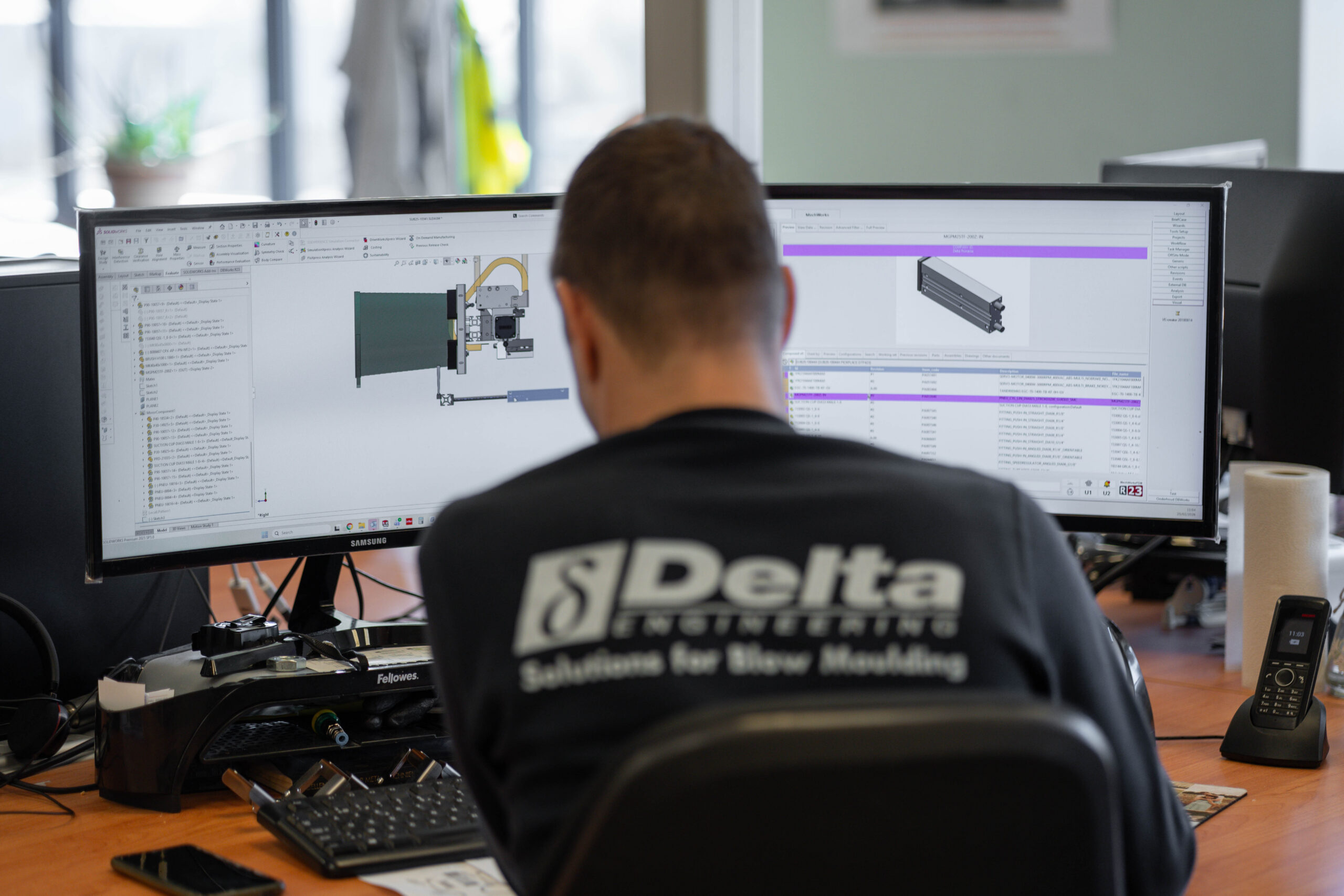
Our engineering teams design every system in-house, combining mechanical, electrical and software expertise. We create layouts that fit the available floor space, product range and speed requirements, ensuring stable flow, safe operation and seamless integration with existing equipment.
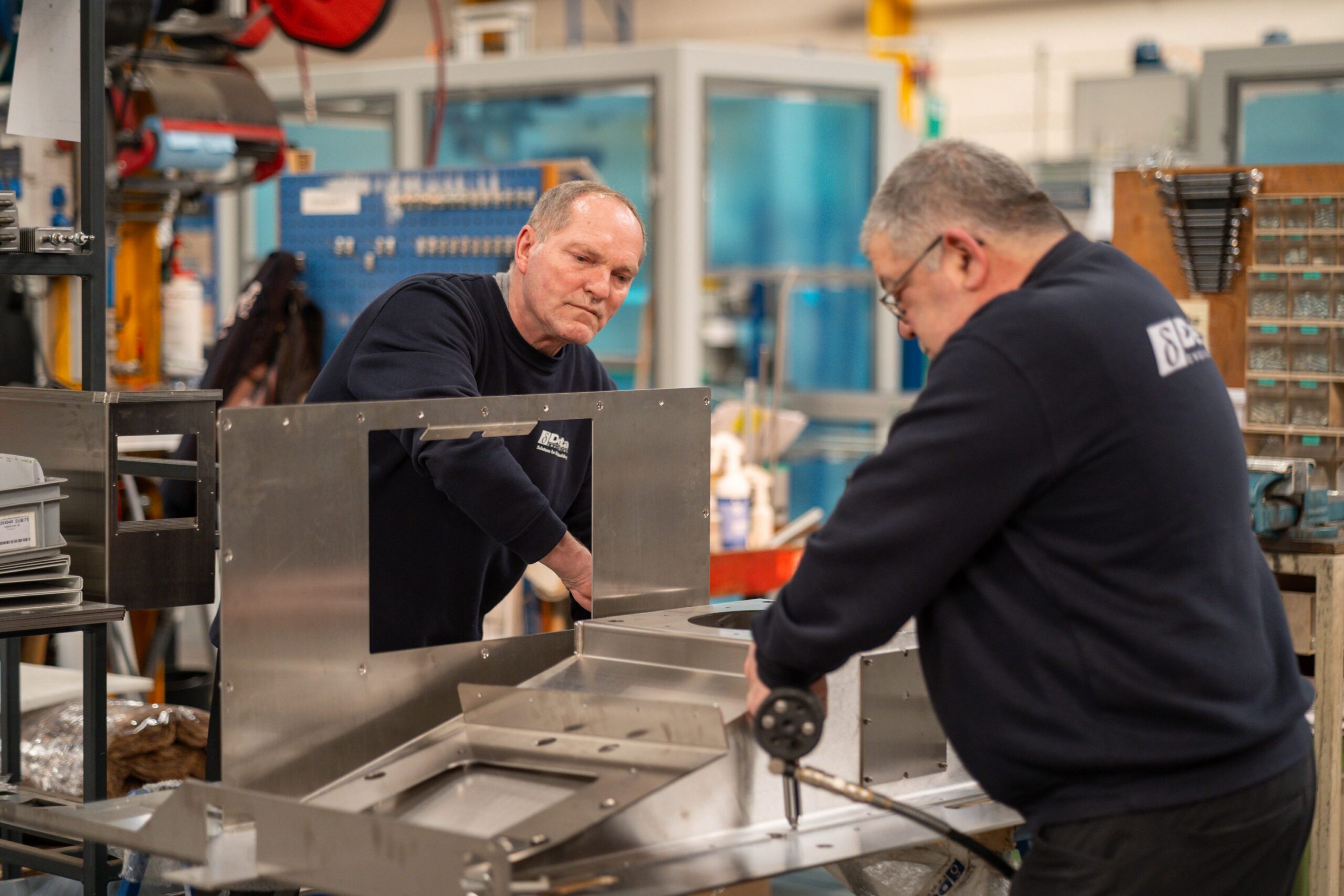
All machines are manufactured in our own facilities for full quality control. From precision machining to assembly and testing, every step is handled in-house. This guarantees long-term reliability, consistent output and equipment that meets demanding industrial standards.
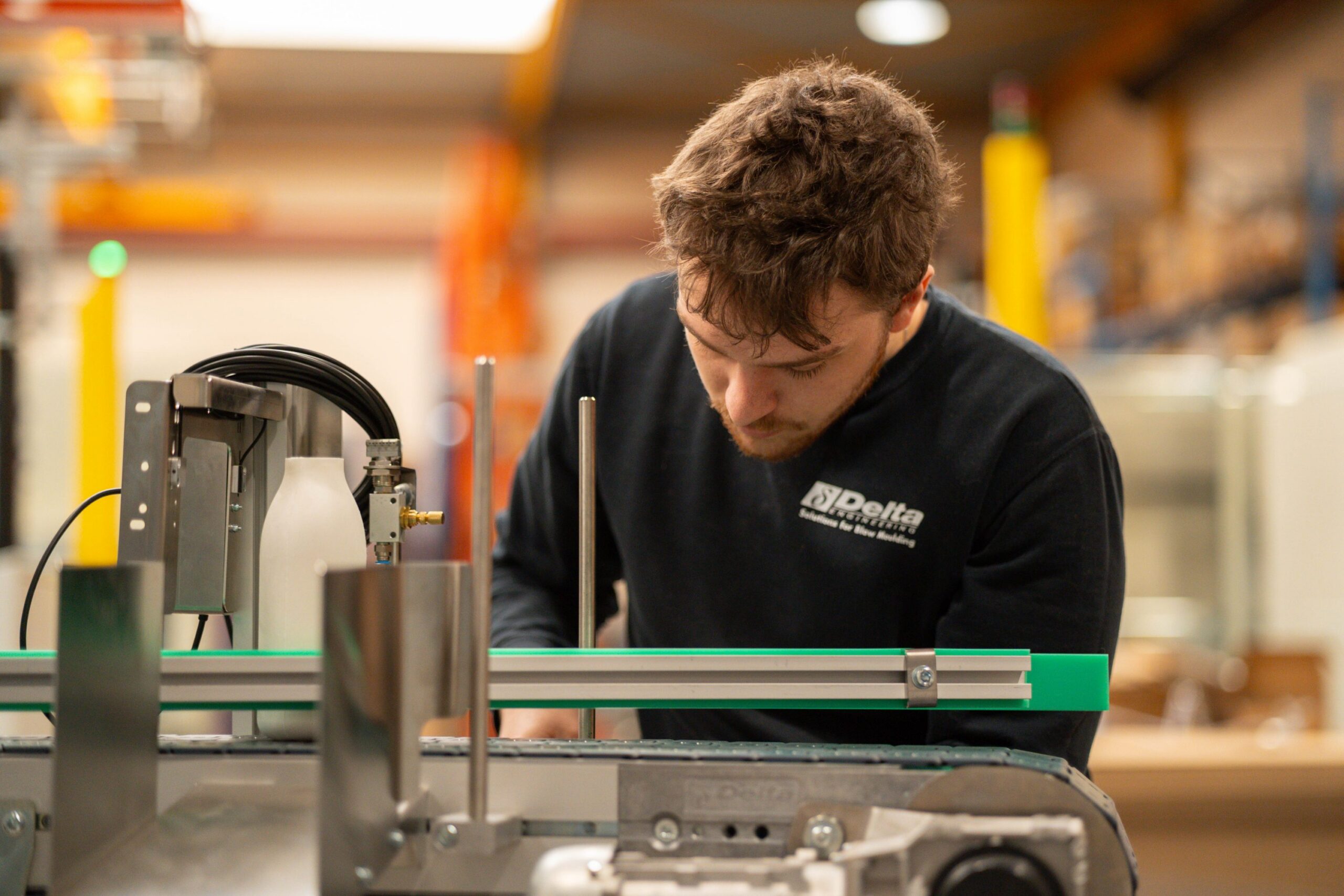
Our specialists install and commission our equipment efficiently, with minimal disruption to the customer’s production. We fine-tune settings on site, integrate controls, and train operators so automation runs safely, smoothly, and at full performance from day one.
Our multilingual service teams provide remote assistance, preventive maintenance and fast spare-parts delivery. Whether it’s troubleshooting, upgrades, or audits, we keep automation systems running reliably and ensure maximum uptime worldwide.
Case studies
FAQ
When blow molding multilayer bottles, the barrier layer must be exposed to create a proper sealing surface. Neck milling removes the top layer to restore a flat, clean sealing area on the barrier layer, ensuring proper cap application and preventing leakage.
Our systems clamp bottles at both body and neck, keeping the neck in a fixed position, independent of the base. Combined with servo-controlled positioning of the head, this prevents over-milling, maintains tight tolerances, and delivers consistent sealing performance.
Neck milling is suitable for multi-layer bottles with EVOH or PA, but it can also be used to finish PET and Tritan® drinkware.
Delta Engineering offers both single-head and twin-head neck milling units. Single head systems suit standard production speeds, while twin head versions increase throughput for high-volume lines without compromising milling accuracy or sealing performance.
A combination of motion-controlled chip breaking and vacuum-assisted chip extraction removes debris at the source, keeping the milling zone clean, hygienic, and stable for continuous operation.
Delta Engineering Belgium
& Delta Engineering Group
NEWSLETTER